
How the system works
The technological and regulatory innovations developed and demonstrated by UCLA make it simple and affordable to operate reverse-osmosis (RO) water treatment at small scale. This provides protection against most contaminants for all households on a well.
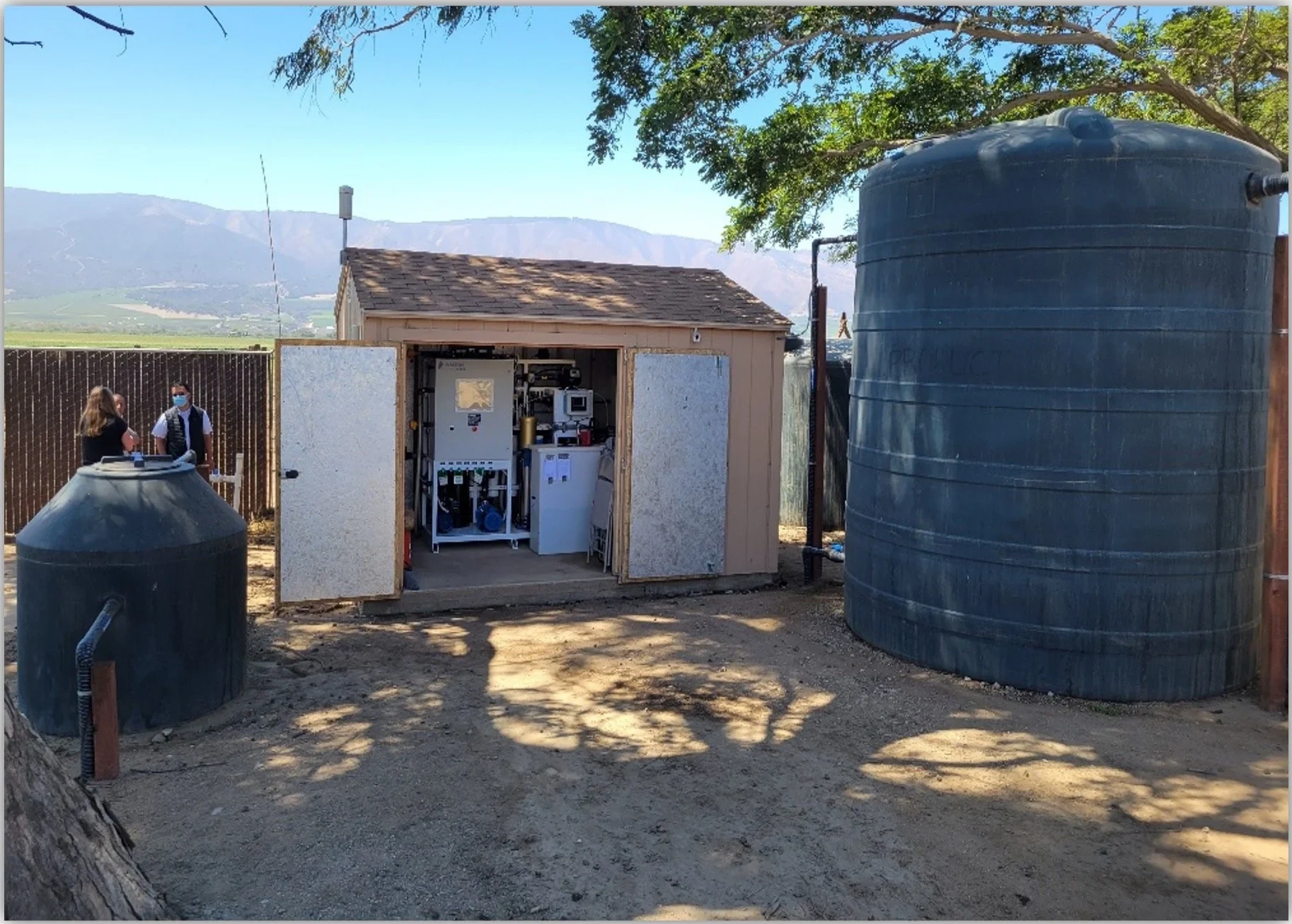
The treatment technology
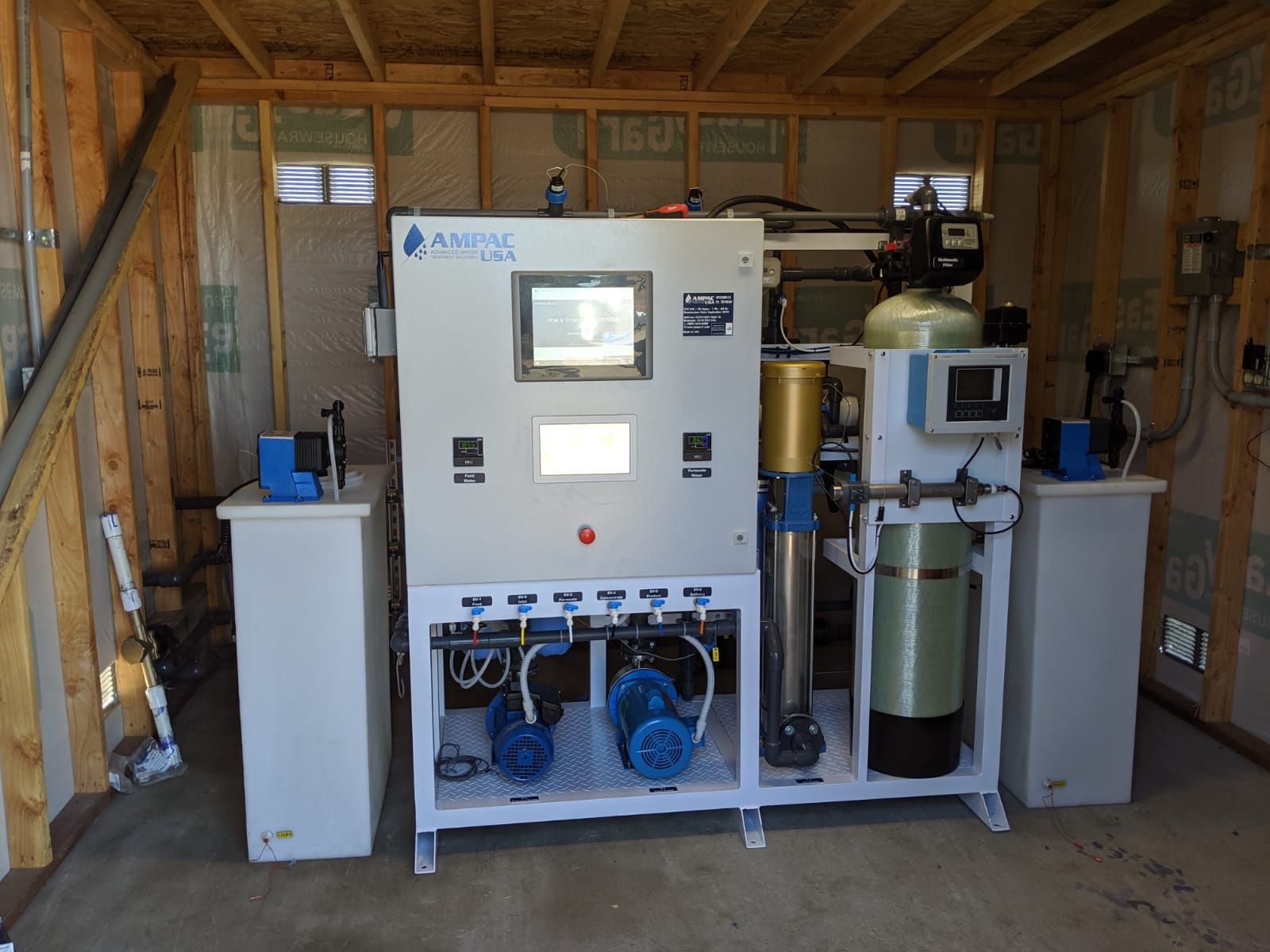
Reverse osmosis pushes water through a membrane that blocks a wide range of contaminants, including nitrate and salts. It is the most widely effective treatment method, but conventional systems require trained staff on site around the clock. The system developed at UCLA operates autonomously - without the need for a constant onsite operator.
Four things make that possible:
- A standardized process that automatically adjusts. The system returns part of the concentrate — the contaminants filtered out — to the feed water and treats it again. That lets it tune to variable salinity and contaminant levels for energy and water efficiency.
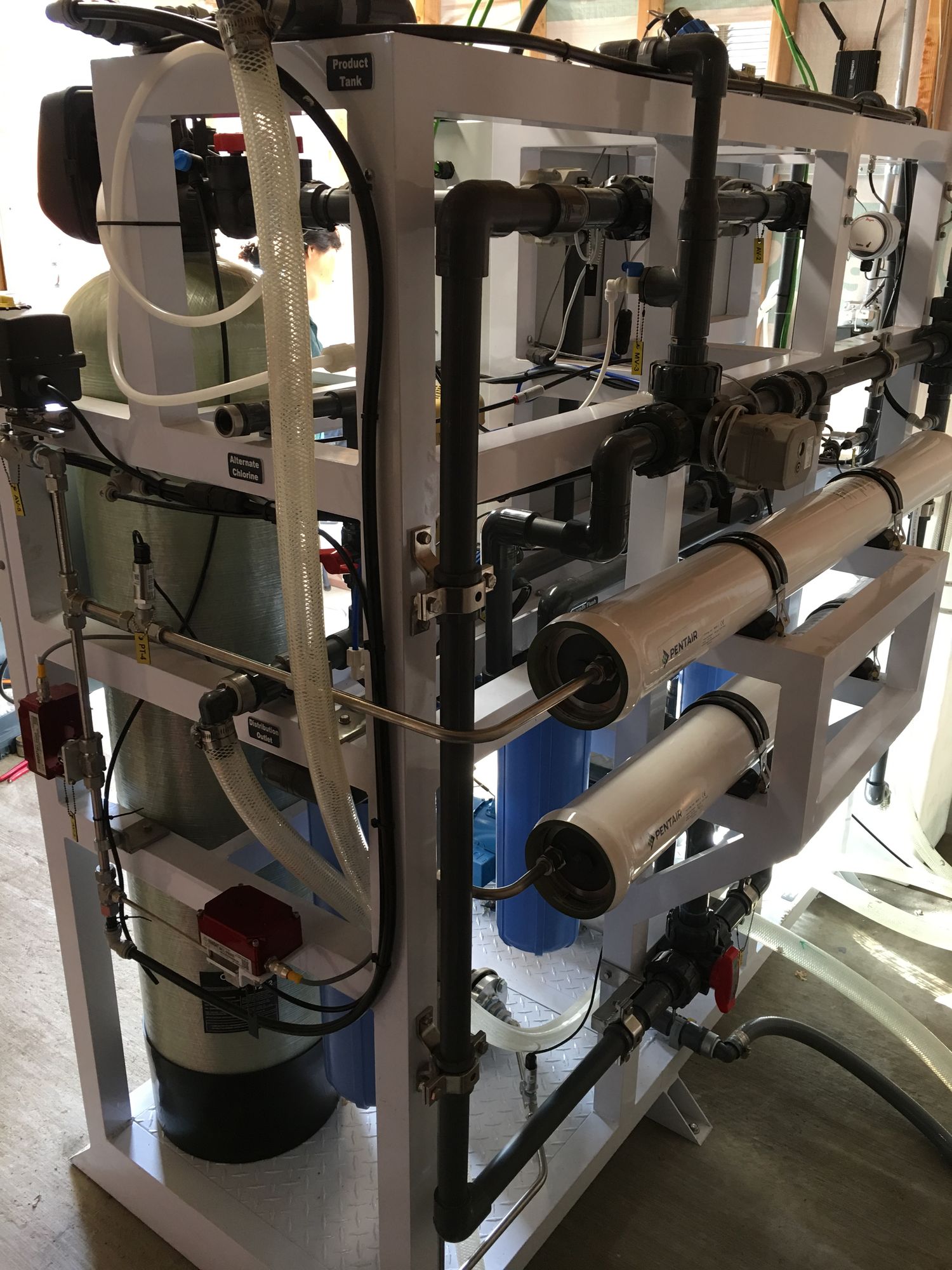
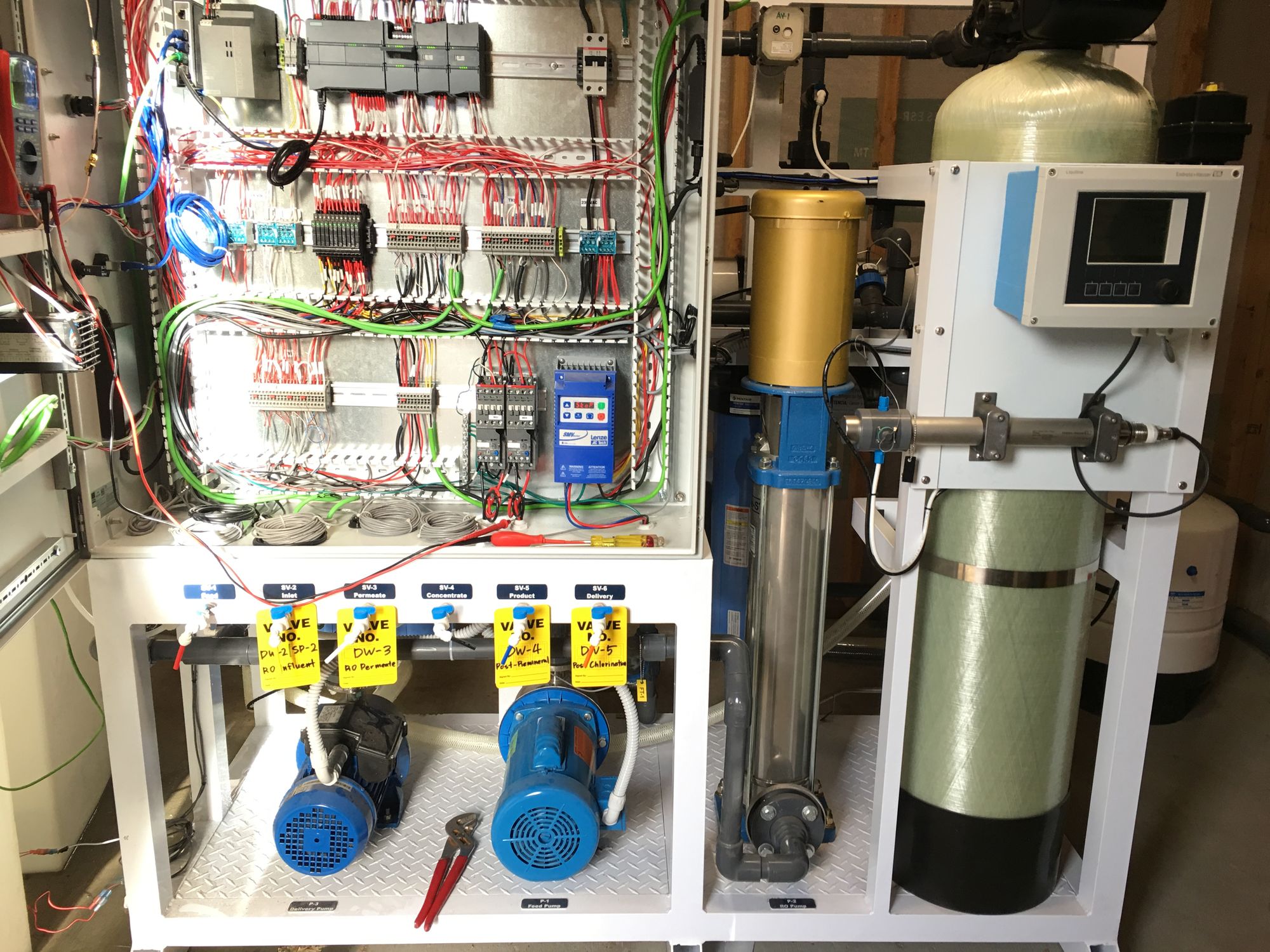
- Automated, small-batch treatment. The system treats well water to maintain the volume needed by the community in a storage tank. Unlike traditional RO, system operations don't require an operator constantly onsite, which is made possible using automated sensors, valves and pumps to provide water that meets safety standards.
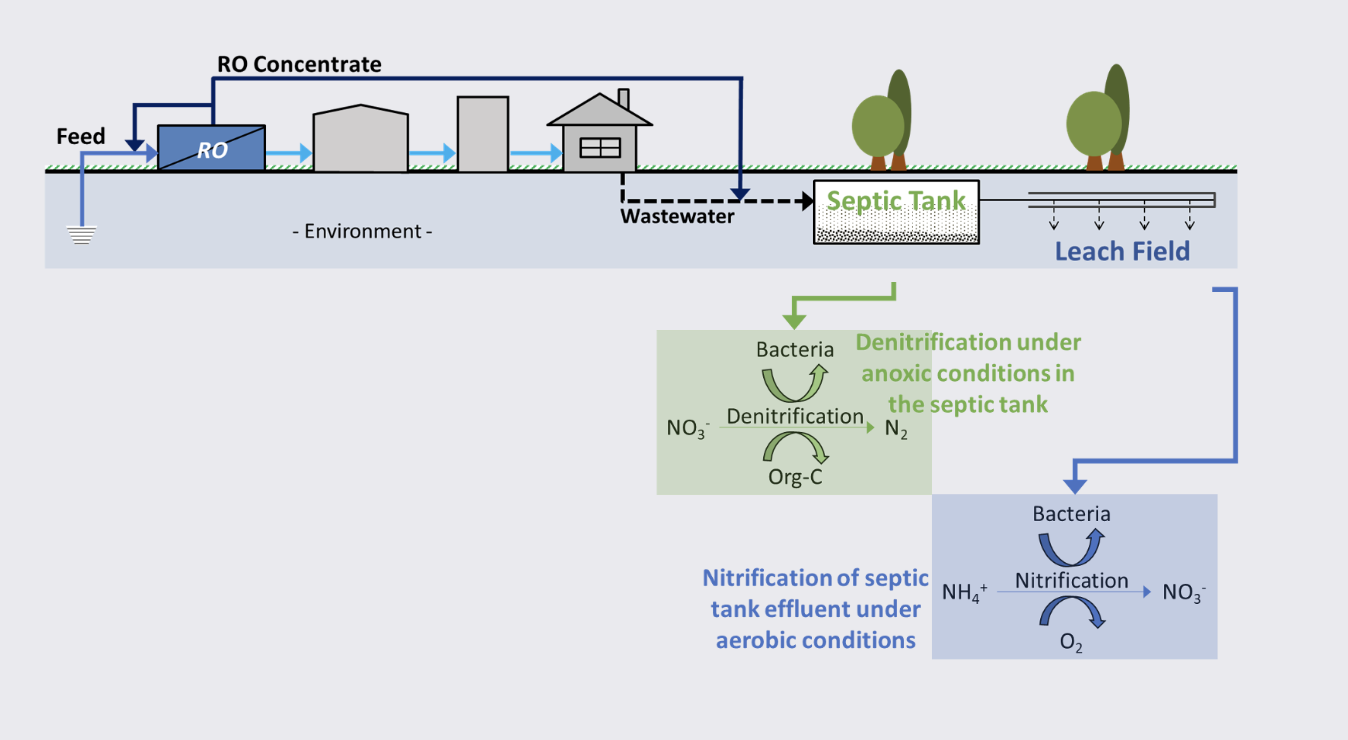
- Onsite concentrate disposal. The concentrate carrying the removed contaminants goes to the property's existing septic system, where the tank's anoxic conditions convert nitrate to nitrogen gas, so none of it reaches the leach field. A General Waiver from the Central Coast Regional Water Quality Control Board permits this up to 10,000 gallons per day. Other contaminants removed by the RO go into the concentrate, bypassing the house to rejoin the domestic wastewater at the septic tank, so there is no increased concentration of contaminants.
- Remote monitoring and control. Performance data is acquired every 2 to 3 seconds and sent to both a local system data storage and a remote supervisory server. The system self-adjusts to ensure the production of safe drinking water. When operator intervention is needed, the system alerts the operator via phone, text, and/or email.
The Virtual Water District
Each system runs on its own and reports to a remote dashboard that communicates system performance. That lets one licensed operator monitor a group of 20 to 30 systems in the same region, and arrange for routine maintenance visits.
Sharing one operator and equipment across multiple wells is what makes treatment affordable for a well that serves multiple homes. Our first Virtual Water District will be in Monterey County, and we are exploring other geographies.

Our process
We will establish the Virtual Water District by bringing our treatment technology and management to more communities through a series of steps.
-
Identify, engage, and evaluate communities
- Identify communities through partner organizations and agencies already supporting them
- Engage, demonstrate the technology and establish trust
- Measure water consumption and water quality
- Design the site layout and the upgrades needed to existing infrastructure
- Agree on final terms and service costs
-
Secure funding
Arrange for public infrastructure funds, and for operating subsidies where a disadvantaged community needs them.
-
Final design and permitting
Submit the final construction plans, along with the treatment system's design and operating plan, to local agencies for permitting.
-
Manufacturing
Arrange system manufacturing contract for system completion in one to three months.
-
Construction and commissioning
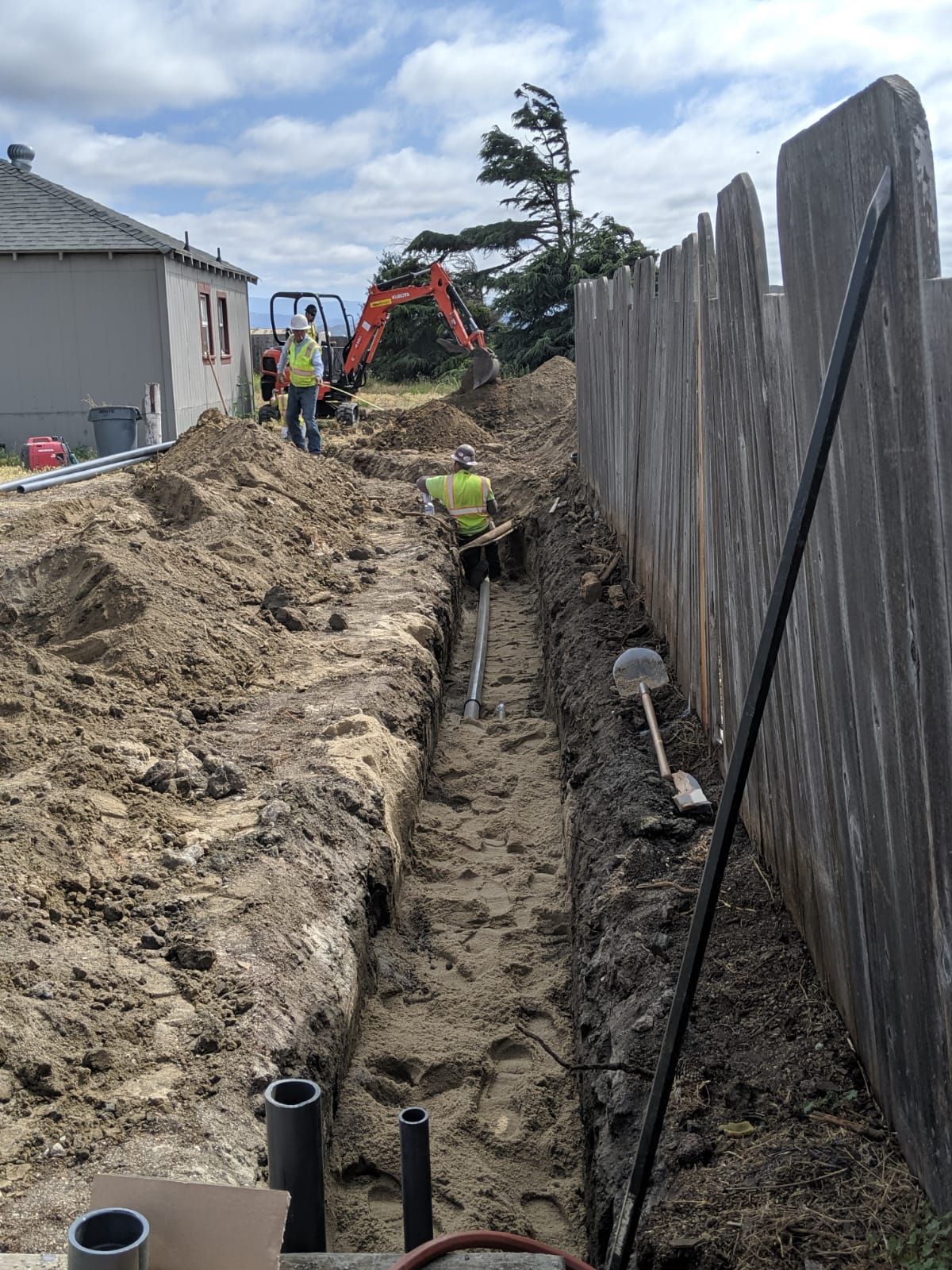
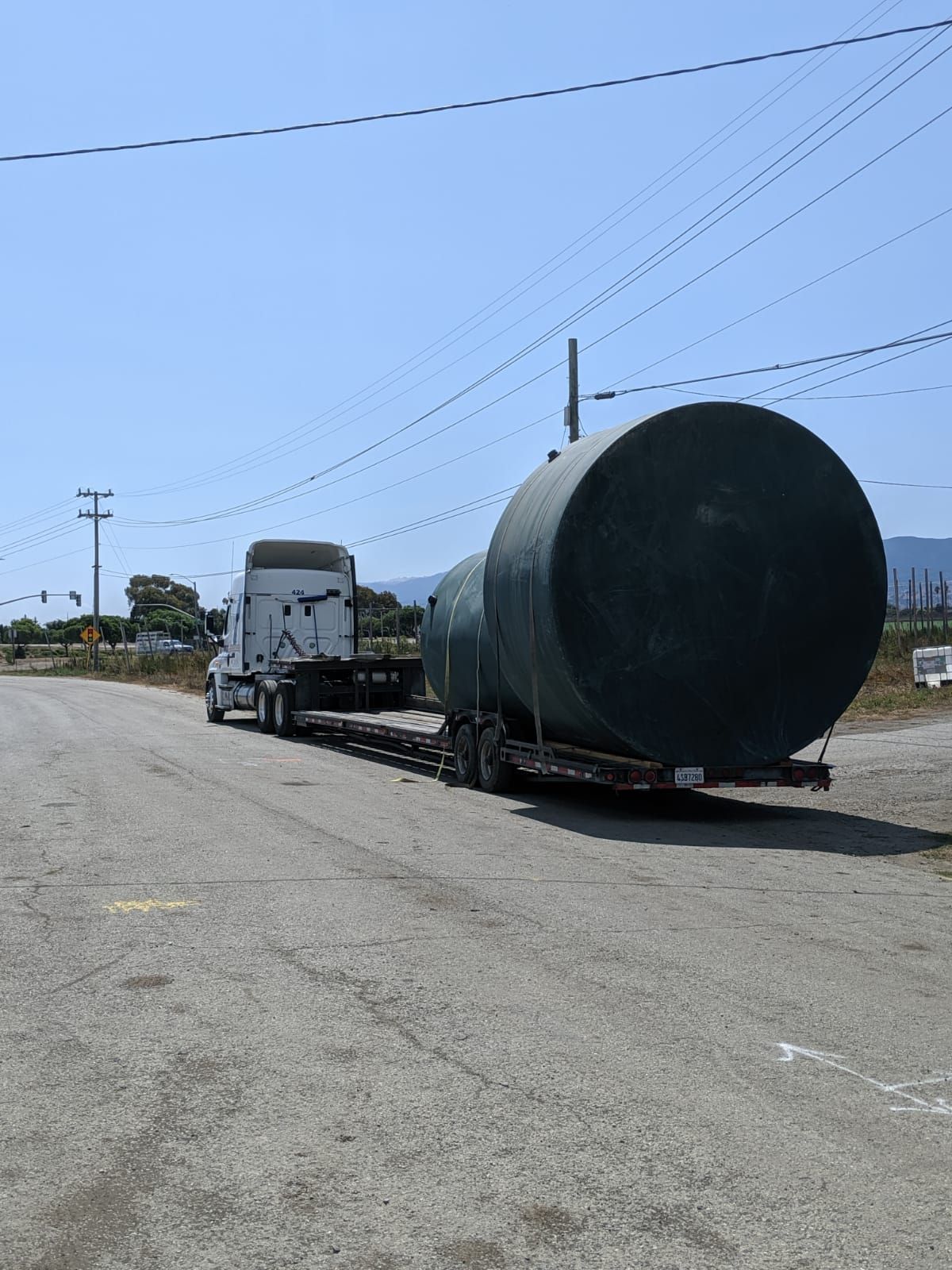
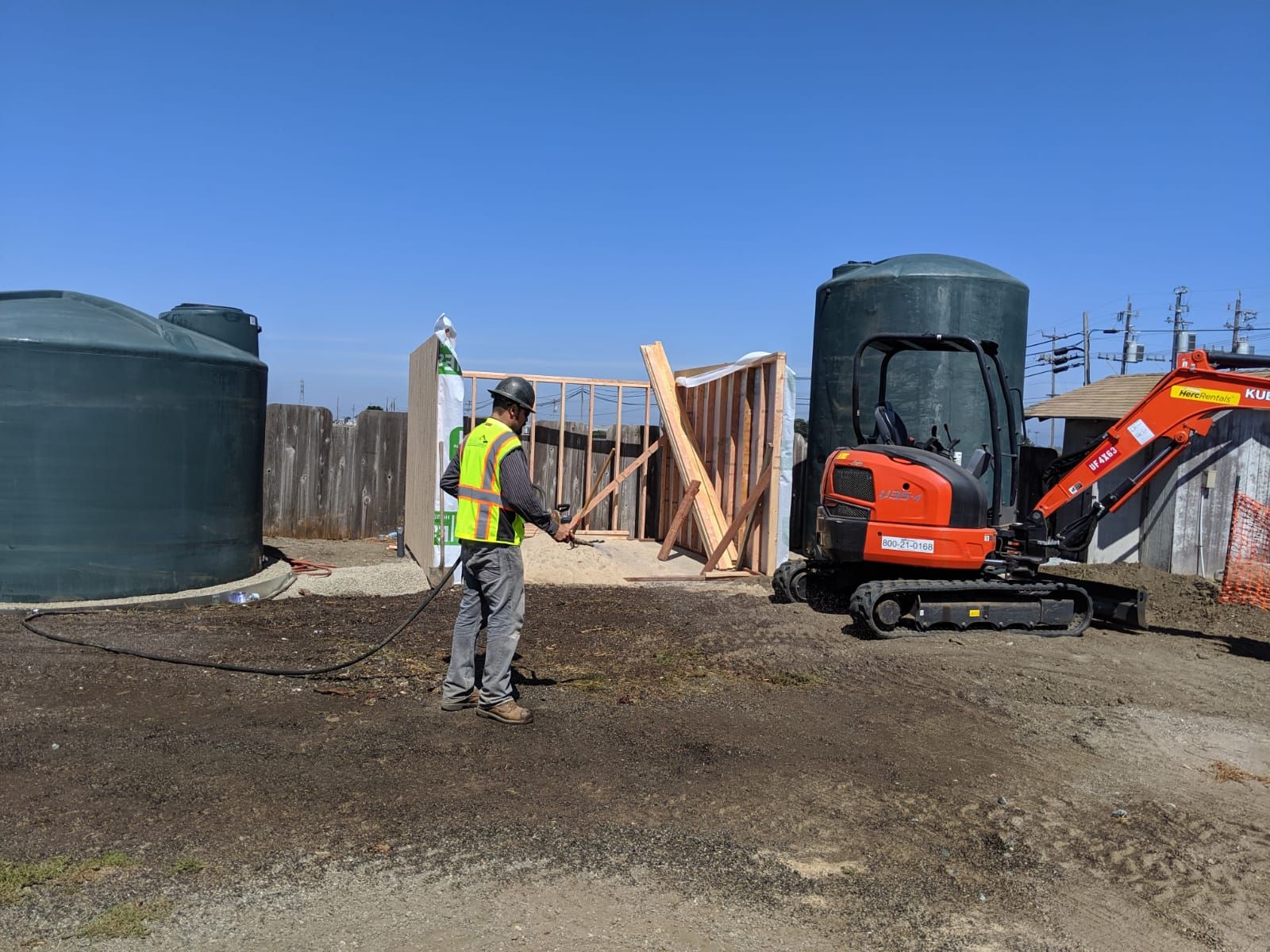
Site updates, water lines, storage tanks, and a small shed for the treatment unit, followed by system deployment and regulatory approval - about one to three months.
On site during construction
Research and resources
During the UCLA pilot, the treatment systems were regulated by the County of Monterey Health Department, with oversight from the Central Coast Regional Water Quality Control Board.
Get in touch to learn more
Whether you own a well, rely on one, work with rural communities, or fund water projects, we'd like to hear from you.